
Beaphar Small Animal Milk – Milk Replacer for Baby Rabbits, Guinea Pigs & Other Small Animals (200g)
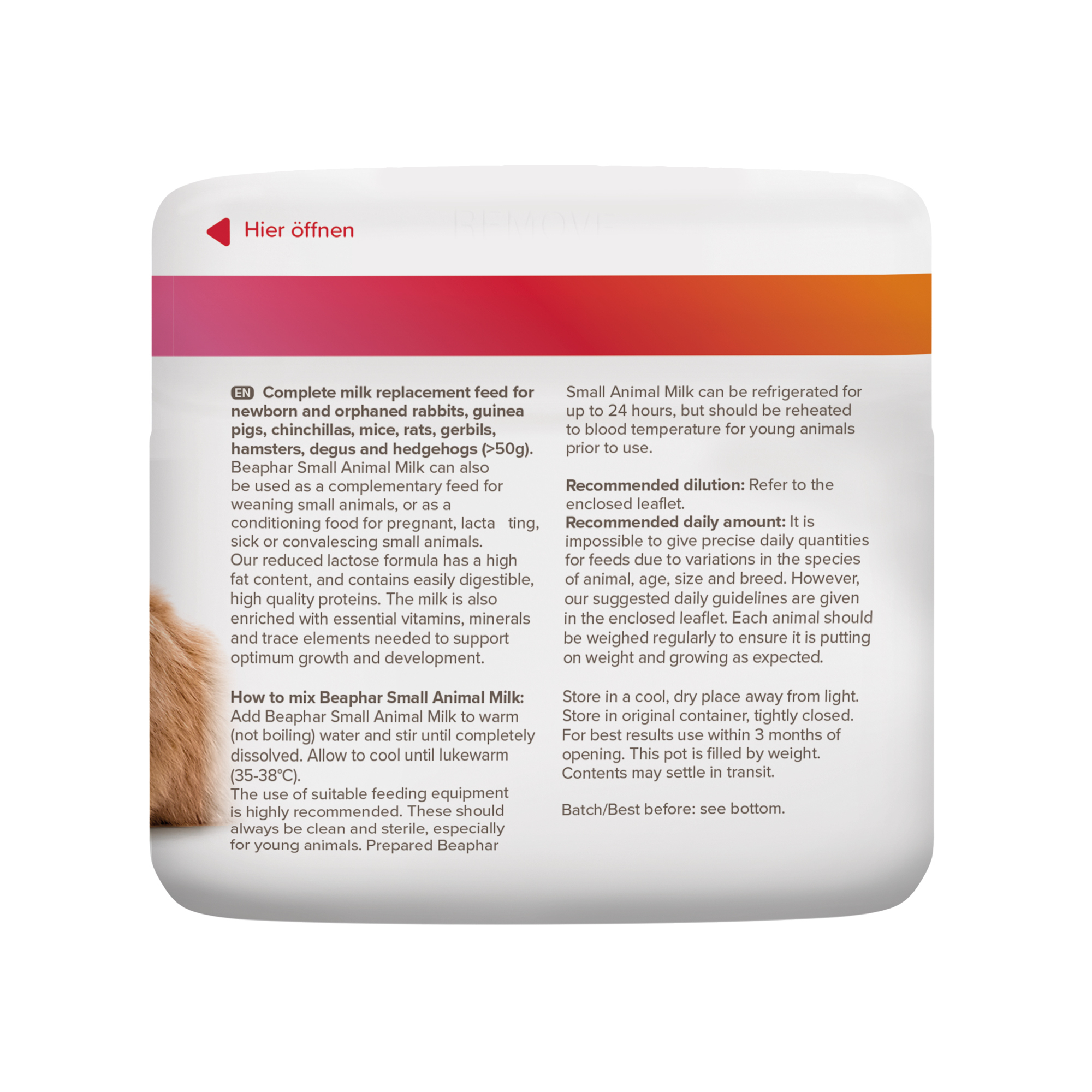
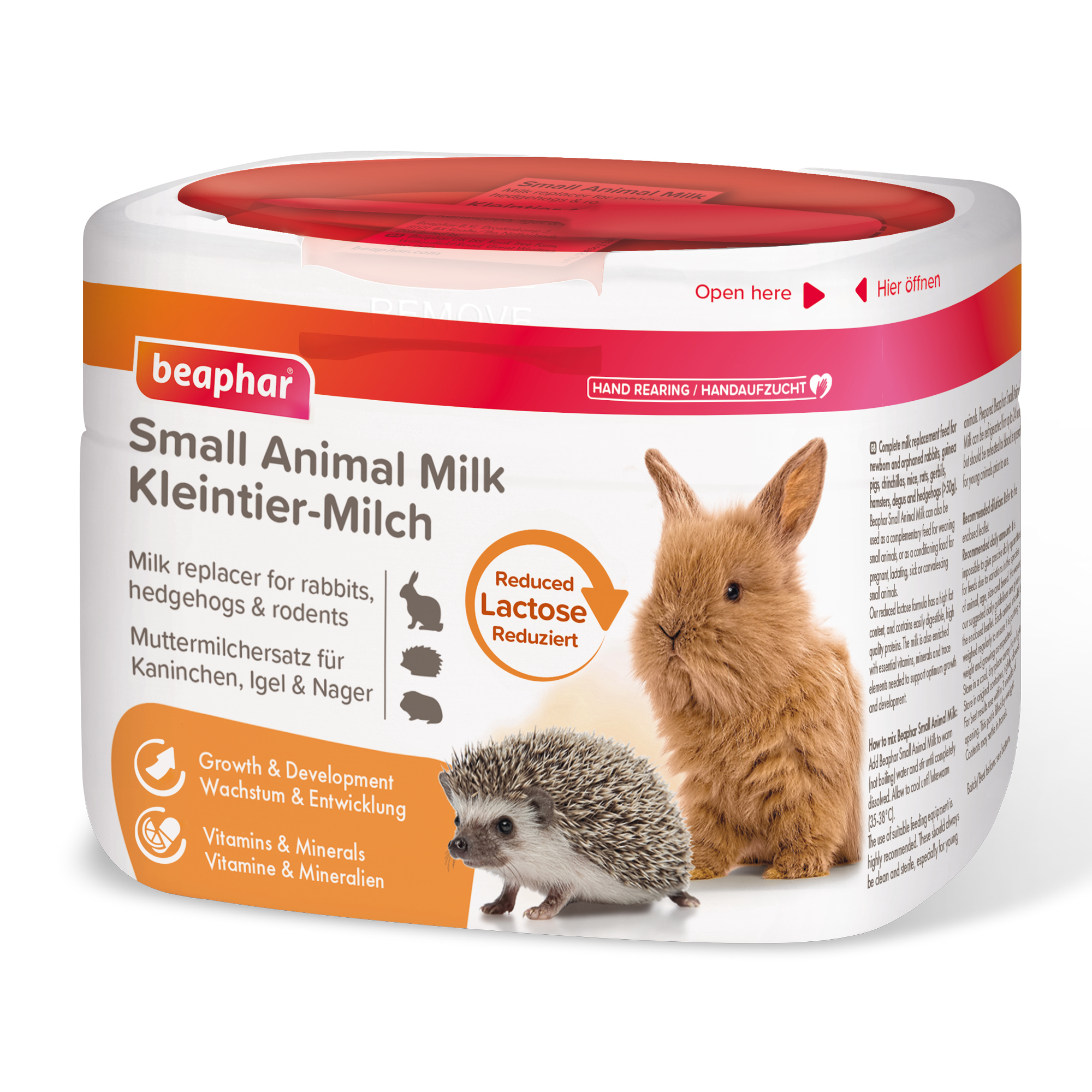
A complete milk replacer for newborn or weaning small animals. Beaphar Small Animal Milk provides essential proteins, fats, vitamins and minerals to support healthy growth and give baby rabbits, guinea pigs and other small animals the best start in life.
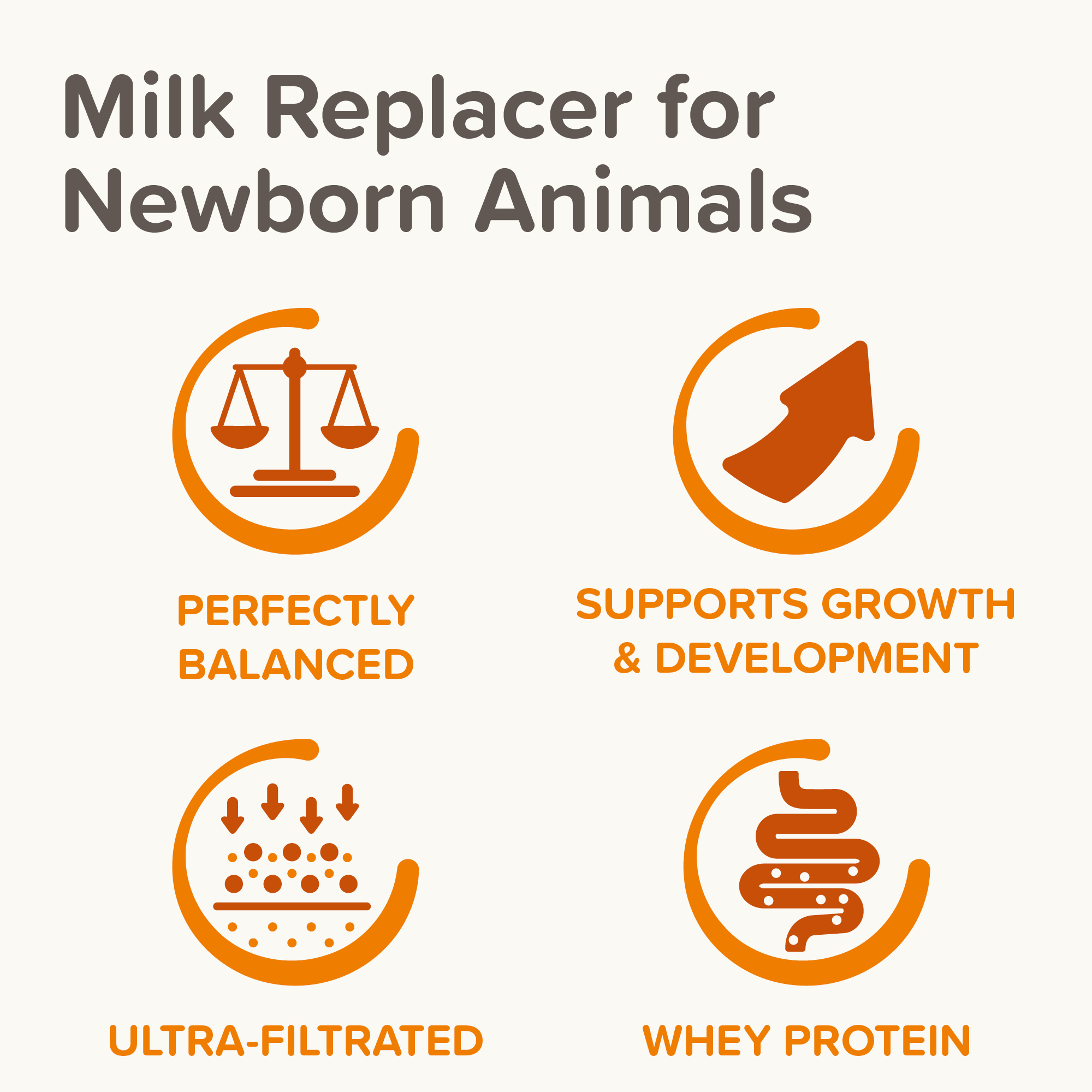
- COMPLETE MILK REPLACER FOR NEWBORN YOUNG ANIMALS: Nutritionally balanced formula providing essential vitamins, minerals and proteins for newborn and young small animals to support optimum growth and development.
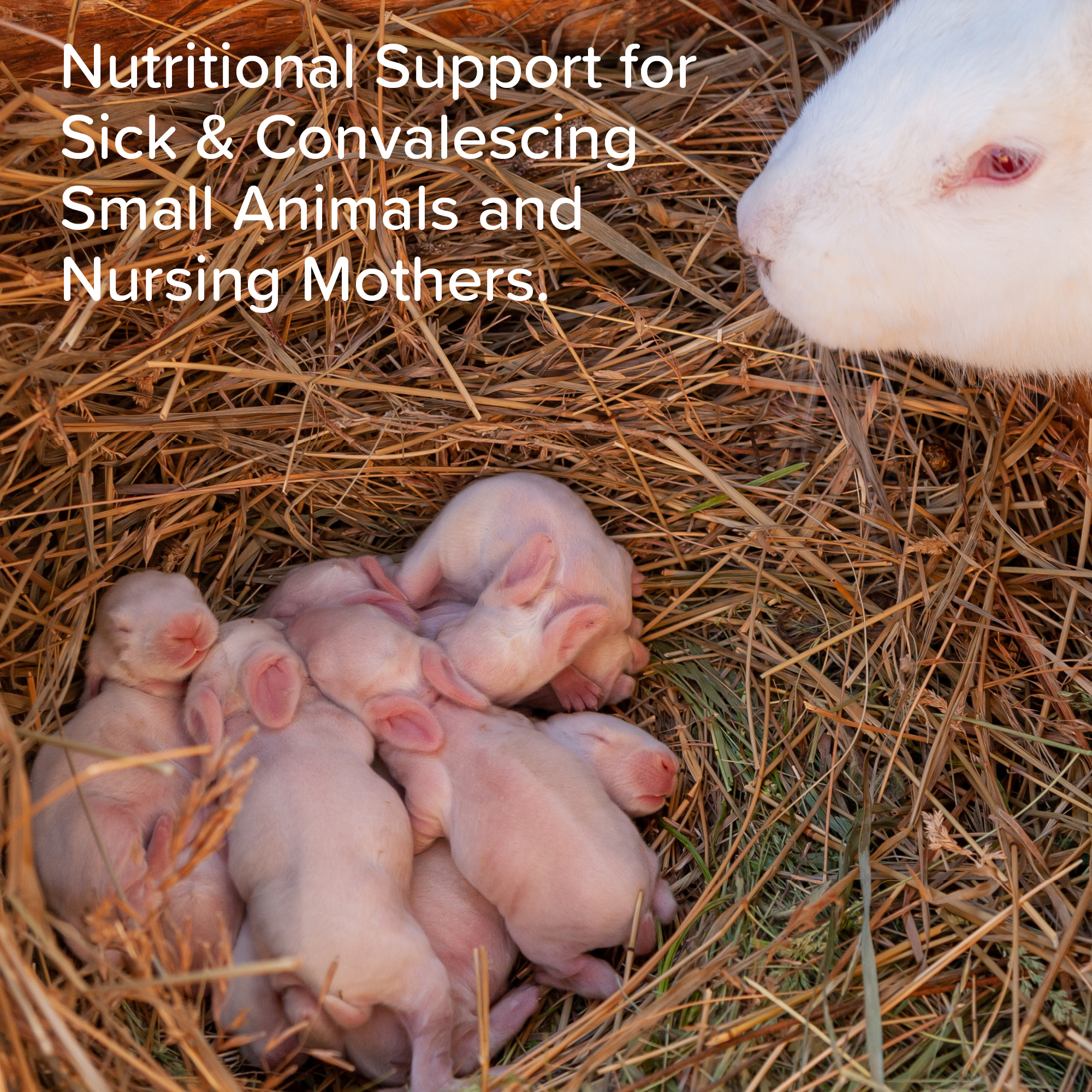
- COMPLEMENTARY FOOD: For weaning small animals, or as a conditioning food for pregnant, lactating, sick or convalescing small animals.
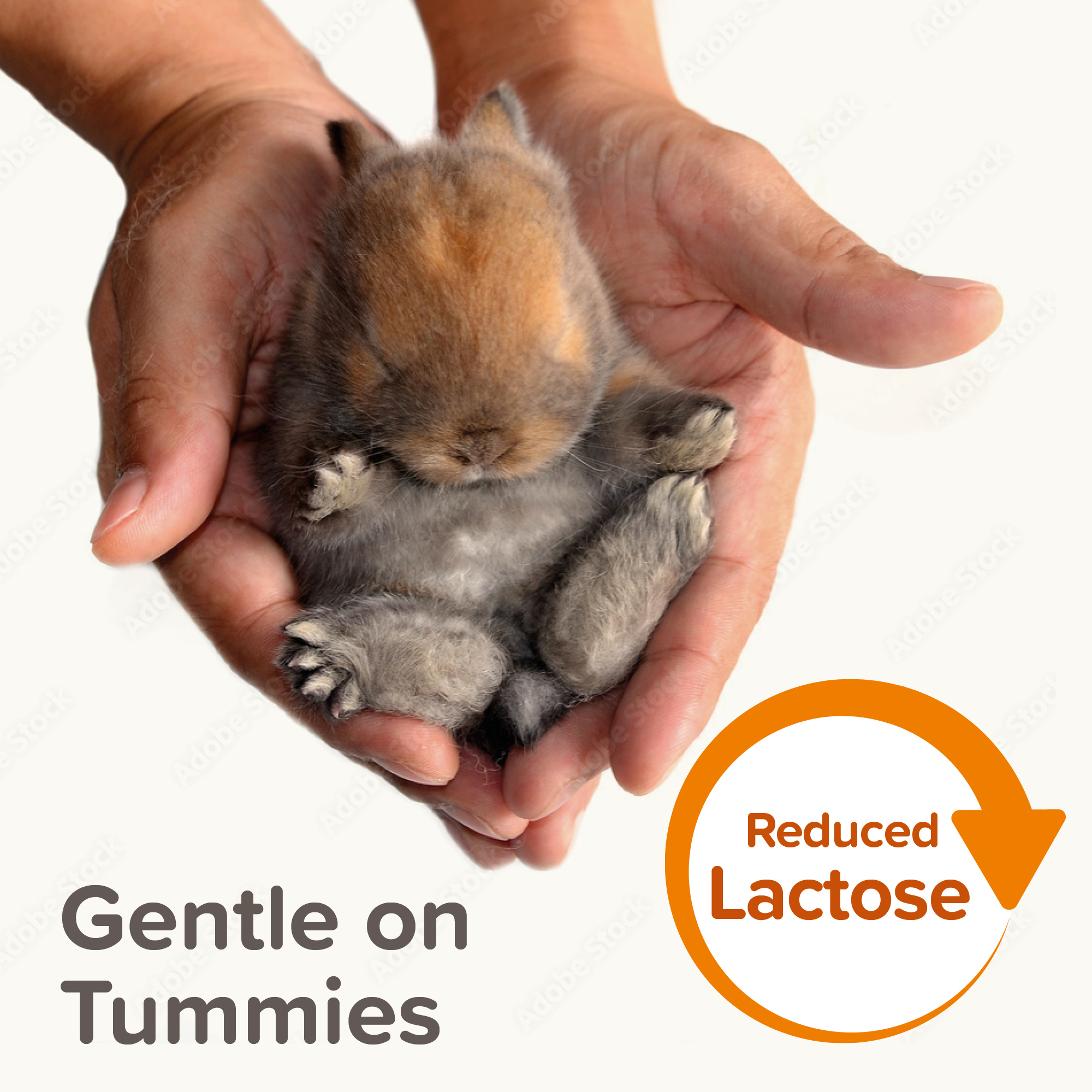
- GENTLE ON TUMMIES: The reduced lactose formula has a high fat content and contains easily digestible, high-quality proteins for delicate stomachs. Ideal for orphaned, underweight or sick rabbits, guinea pigs and other small animals.
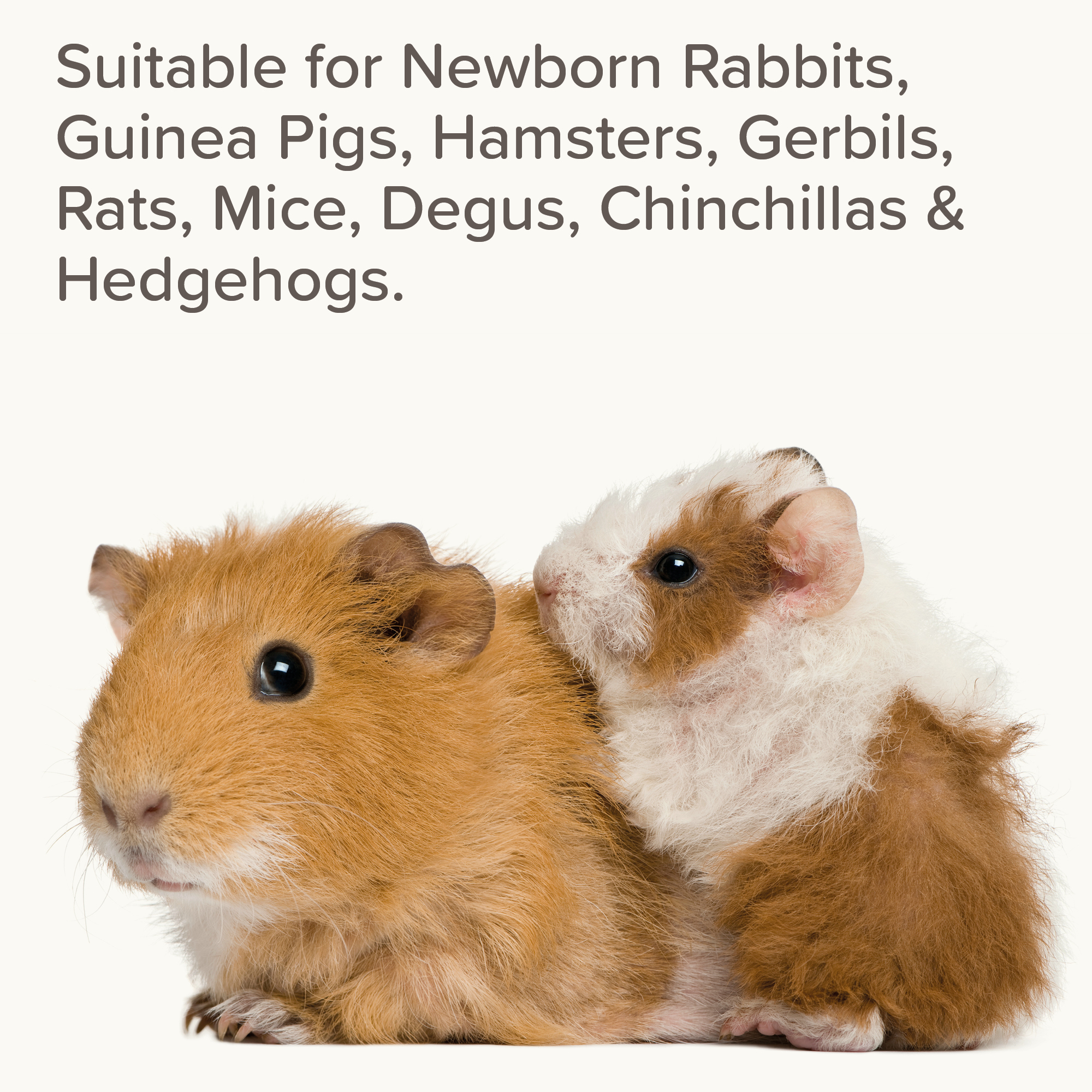
- SUITABLE FOR MANY SPECIES: Perfect for baby rabbits, guinea pigs, hamsters, gerbils, rats, mice, chinchillas, degus and hedgehogs requiring complete early-life nutrition.
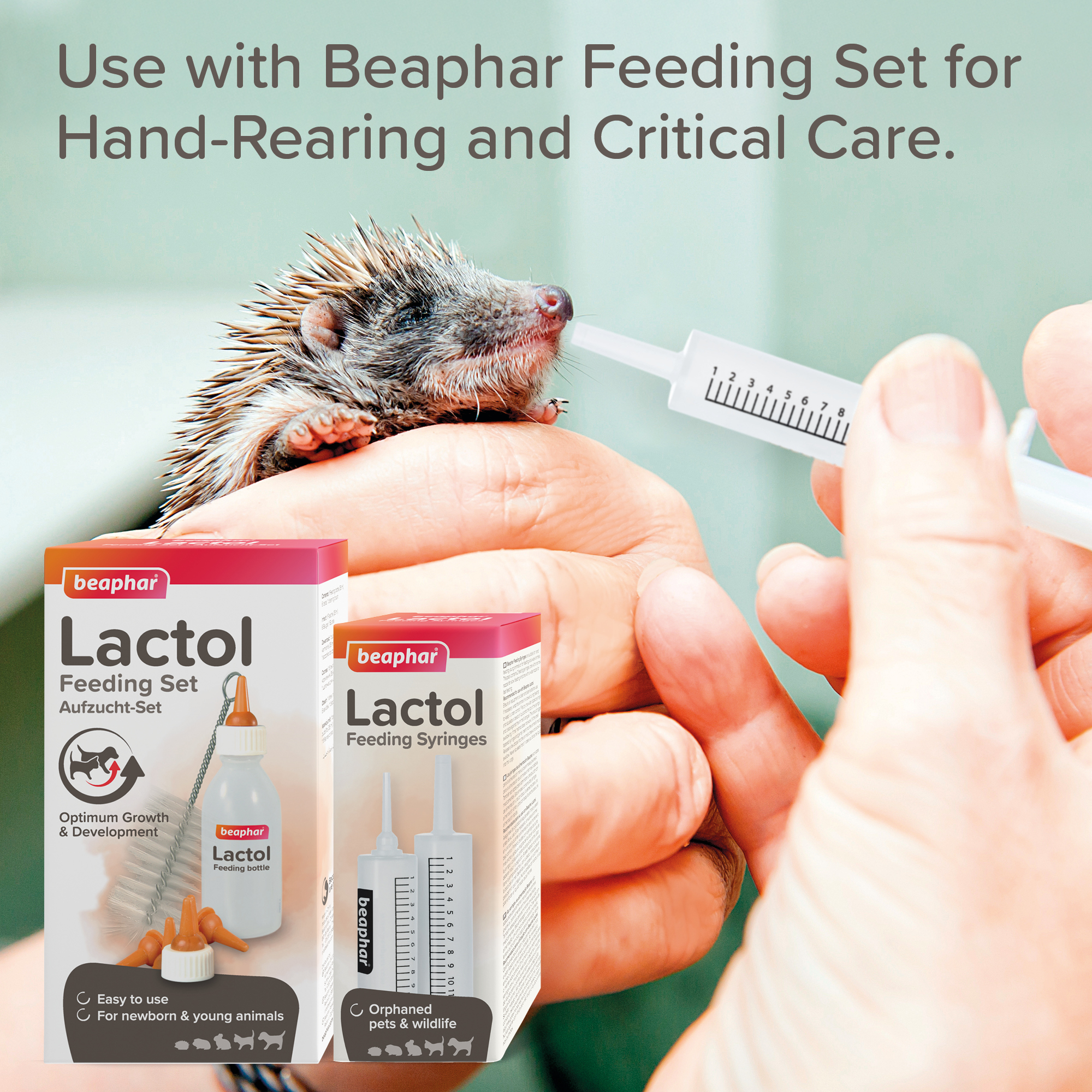
- EASY TO MIX & FEED: Smooth-mixing formula for use with feeding bottles or syringes. Ideal for hand rearing, weaning support and critical-care feeding.
Description
Give vulnerable young animals the best start in life with Beaphar Small Animal Milk, a complete milk replacer formulated for newborn, orphaned or underweight small animals. Developed by pet-care experts, this reduced lactose formula has a high fat content and contains easily digestible, high-quality proteins, vitamins and minerals to support growth and development from birth through weaning. Whether an infant has been rejected by the mother, is part of a large litter, or requires additional support during hand rearing, this enriched formula offers complete, balanced nutrition. Suitable for baby rabbits, guinea pigs, hamsters, gerbils, rats, mice, degus, chinchillas, hedgehogs and other small animals, it mixes smoothly and is easy to feed using a bottle or syringe. Beaphar Small Animal Milk is also helpful for nursing mothers needing extra nutritional support or as part of a critical-care plan for weak or recovering small animals. Trust Beaphar to provide high-quality care when they need it most.
Instructions
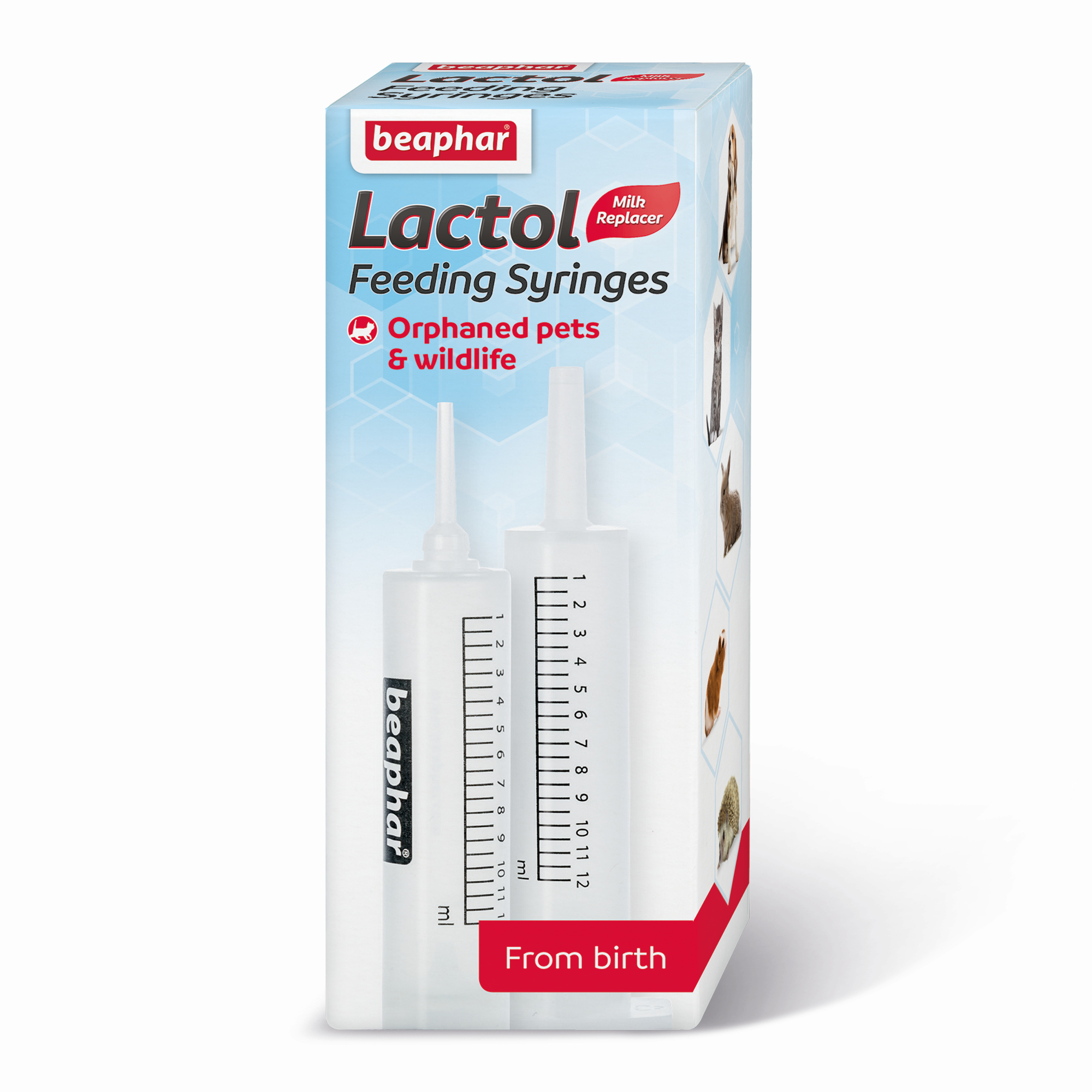
ALWAYS FULLY READ THE PRODUCT LABEL AND LEAFLET BEFORE USE. When hand-rearing orphaned animals it is recommended to seek veterinary advice as soon as possible to discuss any necessary medical care, such as administration of an electrolyte solution. It is impossible to give precise daily quantities for feeds due to variations in the species of animal, age, size and breed. However, our suggested daily guidelines are given below. It is important to weigh young animals daily so that you can monitor their growth increase. Use the tables below for approximate feeding guidelines. Using the scoop provided, add Beaphar Small Animal Milk to warm water (allow boiled water to cool before use) and stir until completely dissolved. If required, allow to cool further until lukewarm (38°C or blood temperature). The use of proper feeding equipment is highly recommended, such as the Beaphar Feeding Set or Beaphar Feeding Syringes. These should always be clean and sterile. Prepared Beaphar Small Animal Milk can be refrigerated for 24 hours but should be reheated to 35–38°C or blood temperature before feeding to young animals. Rabbits When your rabbit is 15 days old, or approximately if the age is unknown, you can slowly change to a more solid diet. Dilution: Using the spoon provided, add 9g (2 level spoons) to 15ml of warm water. Weight Volume per meal Number of feeds per 24 hours 50–90g 2–5.5ml 3 90–300g 7–15ml 2 >300g 15–17ml 1 Guinea pigs When your guinea pig is 2 days old, or approximately if the age is unknown, you can slowly change to a more solid diet. Dilution: Using the spoon provided, add 4.5g (1 level spoon) to 20ml of warm water. Weight Volume per meal Number of feeds per 24 hours 60–120g 1–2ml 11 (9 during daylight hours and 2 overnight) 120–180g 2–3ml 6–7 (6 during daylight hours and 1 overnight) 180–240g 3–4ml 6–7 (during daylight hours) 240–300g 4–5ml 6 (during daylight hours) Hedgehogs When your hedgehog is 20 days old, or approximately if the age is unknown, you can slowly change to a more solid diet. Dilution: Using the spoon provided, add 9g (2 level spoons) to 20ml of warm water. Weight Volume per meal Number of feeds per 24 hours 50–60g 1–2ml 8–12 60–90g 3ml 6 >90g 3ml 3–4 Gerbils When your gerbil is 21 days old, or approximately if the age is unknown, you can slowly change to a more solid diet. Dilution: Using the spoon provided, add 9g (2 level spoons) to 15ml of warm water. Weight Volume per meal Number of feeds per 24 hours 2.5–5g 1ml 12 5–15g 2ml 8 15–25g 3ml 6–8 Hamsters When your hamster is 28 days old, or approximately if the age is unknown, you can slowly change to a more solid diet. Dilution: Using the spoon provided, add 9g (2 level spoons) to 15ml of warm water. Weight Volume per meal Number of feeds per 24 hours 3–15g 2–3 drops 24 15–35g 0.5ml 12 >35g 1ml 12 Degus When your degu is 14 days old, or approximately if the age is unknown, you can slowly change to a more solid diet. Dilution: Using the spoon provided, add 4.5g (1 level spoon) to 20ml of warm water. Weight Volume per meal Number of feeds per 24 hours 8–30g 1ml 12 30–45g 1–2ml 8 45–115g 3–4ml 3–4 115–260g 5–8ml 1–2 Chinchillas When your chinchilla is 21 days old, or approximately if the age is unknown, you can slowly change to a more solid diet. Dilution: Using the spoon provided, add 9g (2 level spoons) to 20ml of warm water. Weight Volume per meal Number of feeds per 24 hours 40–60g 1ml 11 (9 during daylight hours and 2 overnight) 60–70g 1–2ml 8 (7 during daylight hours and 1 overnight) 70–120g 2–3ml 5 (4 during daylight hours and 1 overnight) >120g 3ml 4 (during daylight hours) Mice When your mouse is 12 days old, or approximately if the age is unknown, you can slowly change to a more solid diet. Dilution: Using the spoon provided, add 9g (2 level spoons) to 15ml of warm water. Weight Volume per meal Number of feeds per 24 hours 0.5–5g 1–5 drops 7 (6 during daylight hours and 1 overnight) 5–10g 0.25ml 6 (5 during daylight hours and 1 overnight) 10–15g 0.5ml 3–4 (during daylight hours) 15–30g 1–1.5ml 2 (during daylight hours) Rats When your rat is 14 days old, or approximately if the age is unknown, you can slowly change to a more solid diet. Dilution: Using the spoon provided, add 9g (2 level spoons) to 20ml of warm water. Weight Volume per meal Number of feeds per 24 hours 10–20g 1ml 7 (6 during daylight hours and 1 overnight) 20–40g 1–2ml 6 (5 during daylight hours and 1 overnight) 40–80g 3–4ml 3–4 (during daylight hours) 80–200g 5–8ml 2 (during daylight hours)
Composition
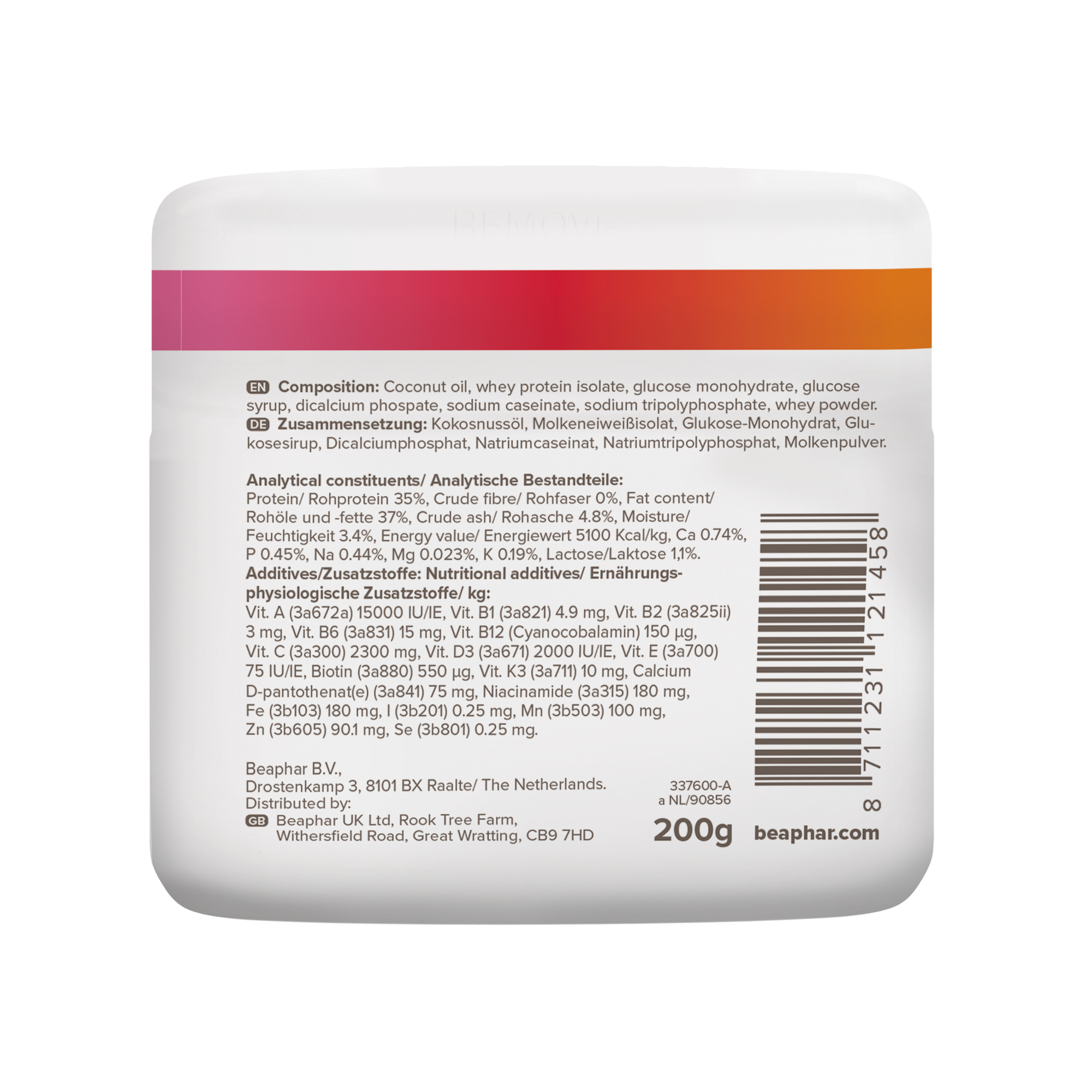
- Ingredients: Coconut oil, whey protein isolate, glucose monohydrate, glucose syrup, dicalcium phospate, sodium caseinate, sodium tripolyphosphate, whey powder.
Specifications
| Contents | 200g |
|---|---|
| SKU | 12145 |
| Barcode | 8711231121458 |
| Form | Powder |
| Animal age | From birth |
| Animal type | Chinchilla, Degu, Gerbil, Guinea pig, Hamster, Hedgehog, Mouse, Rabbit, Rat, Small Animal |
| Animal weight | All weights |
| Storage and safety | Store in a cool, dry place away from light. Keep tightly closed in the original container. For best results, use within 3 months of opening. Once empty, dispose of the pot in the household rubbish. Empty pots can be recycled. |
| Product precautions | ALWAYS FULLY READ THE PRODUCT LABEL AND LEAFLET BEFORE USE. Do not use in hedgehogs weighing under 50g unless advised by a veterinary surgeon. KEEP OUT OF REACH OF CHILDREN. For animal use only. |